Hyderabad, October 2026: An academic field-study exercise undertaken by third-year degree students of the 2024–27 batch of Ignite IAS Degree College has evolved into a meaningful community-service initiative, resulting in the development of improved infrastructure for children at the Mandal Parishad Primary School, Dulapally, Kompally, Hyderabad. The initiative demonstrated how experiential education can move beyond observation and documentation to create tangible impact in the community.
As part of the Field Work Programme at Ignite IAS, third-year degree students visited the Mandal Parishad Primary School to understand its functioning, assess available infrastructure, interact with stakeholders and document challenges faced at the grassroots level. The exercise was intended to expose students to real-world social conditions and encourage them to analyse issues beyond the confines of classroom learning.
During the visit, one particular situation drew the attention of the students. They observed young schoolchildren having their mid-day meals on the muddy ground due to the absence of a suitable elevated and covered dining space. What began as an observation for their academic field report soon became a subject of serious discussion among the students. Rather than simply recording the infrastructural gap and moving on, the students felt that their field study would have greater meaning if they could contribute towards solving the problem they had identified.
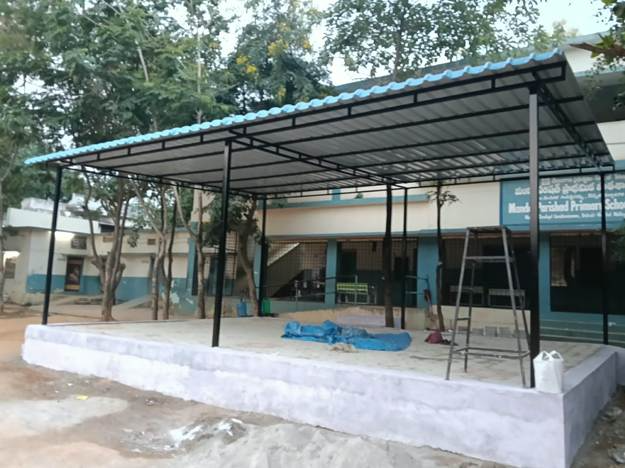
Following discussions between the students, faculty and management, the idea was transformed into a community initiative. A plan was developed to provide the school with a covered shed supported by iron framing along with an elevated cement platform, creating a cleaner, safer and more appropriate space where children could have their meals.
Significantly, the project became a collective effort rather than an institution-led intervention alone. Ignite IAS students contributed financially towards the initiative, with several students contributing from their personal savings. The management of Ignite IAS
also extended financial and institutional support to help translate the students’ idea into reality.
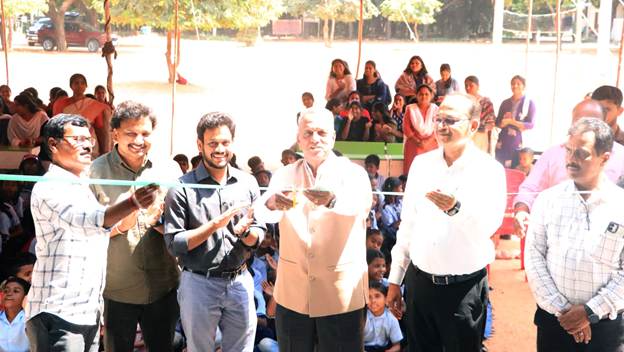
The initiative received significant support from Chairman Sri C. M. Prakash Rao, who contributed parking tiles and extended support towards labour work required for the project. Sri Venu Gopal Reddy, Headmaster of Mandal Parishad Primary School, also contributed financially towards the construction. The participation of students, the educational institution, school authorities and individual supporters helped bring the project to completion.
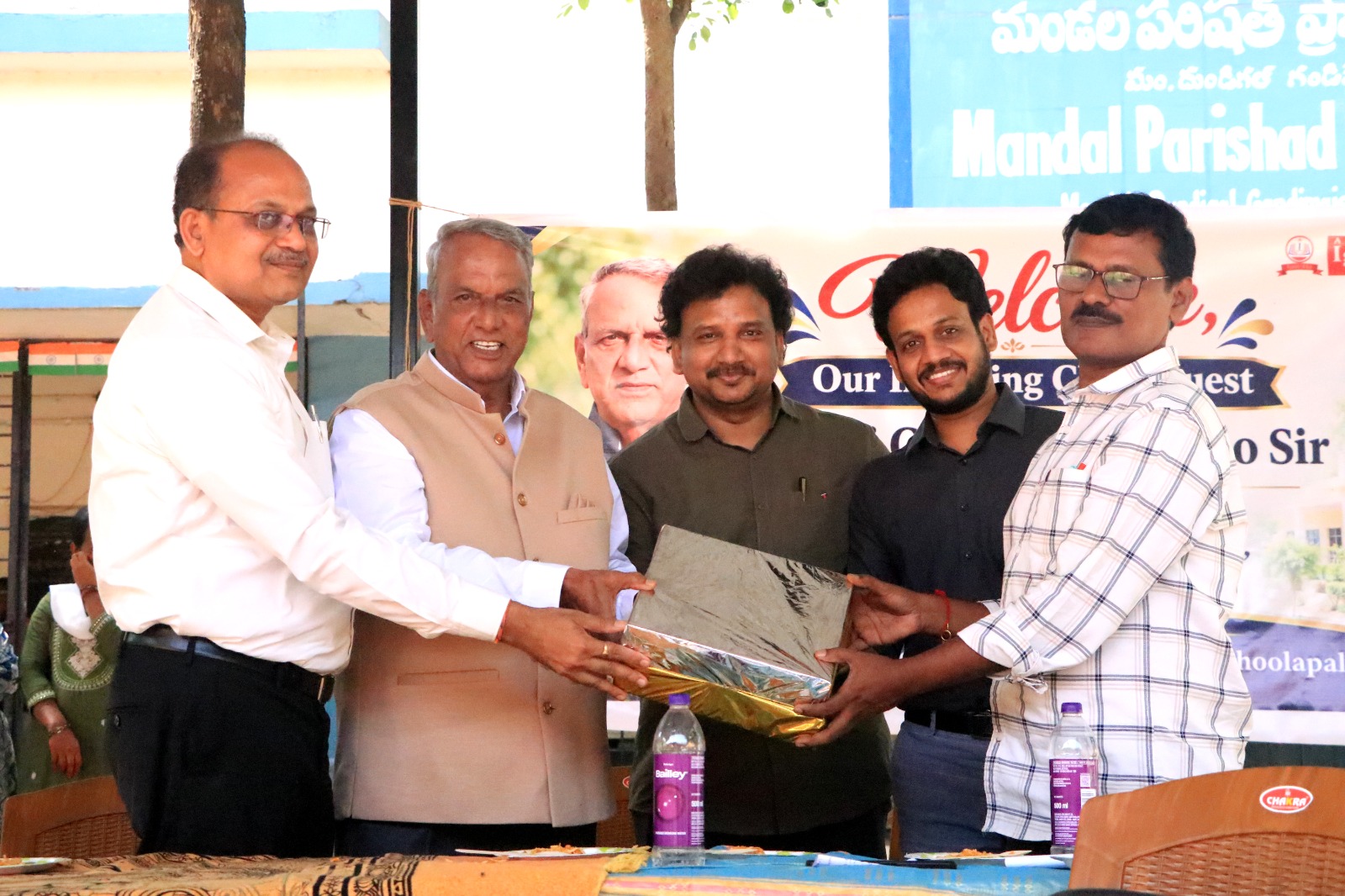
Following completion of the facility, it was formally inaugurated by Chairman Sri C. M. Prakash Rao, marking the culmination of an initiative that had begun with a simple field observation.
Reflecting on the initiative, Sri C. M. Prakash Rao described his contribution as modest compared with the appreciation it received. The visit also carried personal significance for him, as he recalled his own experience of having studied in a government school. Sharing his thoughts with the students, he encouraged them to remain focused on their education, dream ambitiously and work towards becoming IAS and IPS officers and responsible
leaders. He also urged them to retain a spirit of service irrespective of the positions they achieve in life.
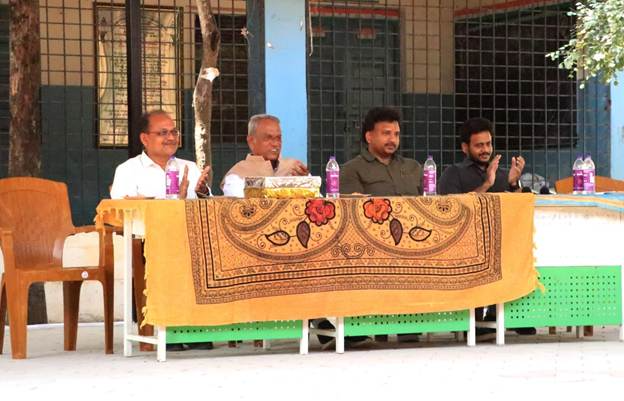
Sri N. S. Reddy, Managing Director and Chief Mentor, Ignite IAS, appreciated the students for refusing to treat field work merely as an academic requirement. He observed that education should gradually develop a sense of responsibility towards society. “It is encouraging to see students identify a genuine need and then come together to address it. As they progress in their careers and lives, they should remember that achievement acquires greater meaning when it is accompanied by responsibility towards the people and communities around them,” he said.
Highlighting the educational philosophy behind the initiative, Sri V. Pavan Kumar, Executive Director, Ignite IAS, congratulated the students, school authorities and all those who supported the project. He said the initiative demonstrated what students can accomplish when education is combined with empathy, initiative and collective responsibility. “These students did not stop after identifying a problem. They discussed a solution, contributed their own resources and participated in turning that solution into reality. Experiences of this nature teach responsibility, teamwork and leadership in a way that conventional classroom instruction alone cannot,” he said.
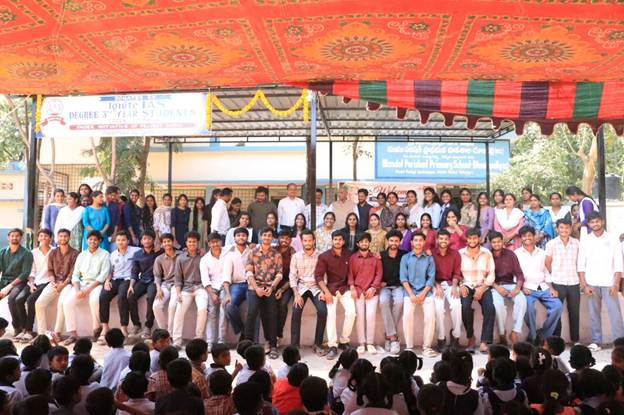
Sri M. Bharat Kumar, Dean, Ignite IAS, said the initiative represented the larger purpose of field-based education. According to him, field work should enable students to observe society closely, understand challenges from the perspective of the people affected and think about practical responses. “A report is an important academic outcome, but when an observation can inspire meaningful action, the learning becomes much deeper. The happiness students experience when they see children benefiting from something they helped create is itself an important lesson in education, empathy and personality development,” he said.
The Dulapally initiative also illustrates a structured model of experiential learning. Students first identified an infrastructural issue during field observation, documented the situation, discussed possible interventions, mobilised resources and participated in creating a practical solution. In the process, concepts such as civic responsibility, community participation, problem-solving, teamwork and leadership moved from theory into practice.
For students preparing for civil services and other leadership-oriented careers, such exposure assumes particular relevance. Public administration frequently involves understanding grassroots challenges, assessing available resources, coordinating stakeholders and developing solutions that respond to citizens’ needs. By encountering such situations during their formative academic years, students gain an opportunity to understand that administration and leadership are ultimately centred on people and their everyday realities.
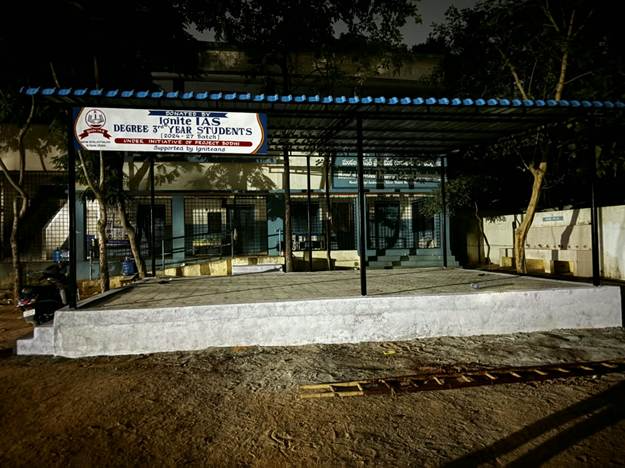
The initiative is part of Ignite IAS's broader emphasis on taking education beyond conventional academics through field work, community engagement, mentorship, leadership activities, practical exposure and 360-degree student development. The institution seeks to develop not only academic competence but also communication, empathy, decision-making, teamwork, social awareness and a service-oriented mindset among its students.
The newly created facility at Mandal Parishad Primary School is expected to provide children with a more suitable and dignified space for their mid-day meals. While the infrastructure itself may be modest in scale, the process behind it demonstrated the potential of student-led community engagement and the impact that can emerge when educational institutions encourage young people to become active participants in solving problems around them.
The project also underscored the importance of collaboration. Students contributed what they could, the Ignite IAS management supported the initiative, Chairman C. M. Prakash Rao extended material and labour assistance, and Headmaster Venu Gopal Reddy contributed towards the construction. The result was a community asset created through shared responsibility rather than the efforts of any single individual.
For Ignite IAS, the initiative reinforces an educational philosophy that places social responsibility alongside academic excellence and career preparation. The institution believes students aspiring to become future civil servants, administrators and leaders should learn early that public service begins much before an official designation is acquired. The willingness to observe, empathise, take responsibility and act in the public interest can itself become the foundation of leadership.
Ignite IAS continues to integrate academics and competitive examination preparation with programmes intended to broaden students’ exposure to society and governance. Through field studies, institutional visits, community initiatives, leadership activities, sports, cultural programmes, mentoring and practical learning opportunities, the institution aims to nurture well-rounded students equipped to approach future responsibilities with competence and sensitivity.
What began at Dulapally as a field report by a group of third-year degree students ultimately became a tangible facility serving government-school children. In doing so, the initiative carried a simple but powerful message: education reaches its fullest purpose when knowledge leads to awareness, awareness creates responsibility, and responsibility ultimately translates into action.
As Ignite IAS puts it, the true value of education is realised when what a student learns becomes useful to someone else.
As Ignite IAS continues to strengthen its commitment to academic excellence, experiential learning and 360-degree student development, the institution has announced that admissions for the academic year 2026–27 are now open across its flagship programmes, including Intermediate + IAS (MPC, MEC, CEC and HEC), Intermediate + CLAT, Degree + IAS (BA, B.Com and BBA), and Direct IAS Coaching. These programmes are designed to integrate academic education with structured preparation for competitive examinations, supported by experienced faculty, personalised mentorship, daily current affairs, regular assessments, answer-writing practice, mock interviews, leadership training and personality development initiatives. With a strong emphasis on nurturing academically competent, socially responsible and future-ready individuals, Ignite IAS continues to provide an educational environment that prepares students not merely for examinations but for meaningful careers in public administration, law and leadership. Students and parents seeking information about admissions, eligibility, scholarships, residential facilities and campus visits can visit the official website www.igniteias.com or contact the admissions team at 7997992480 / 7997992481.